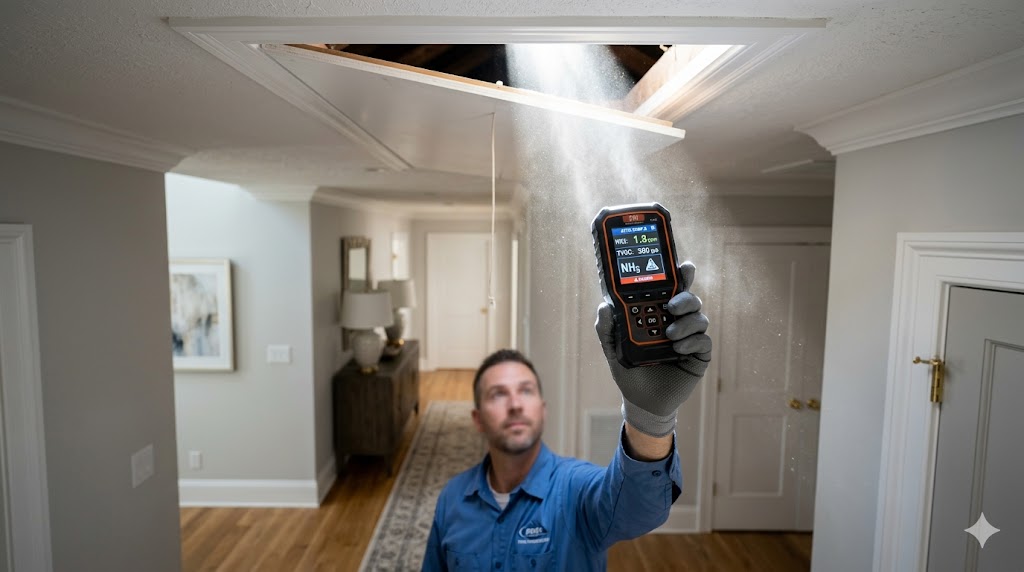




If your home suddenly smells like a dirty litter box but you don’t own a cat, you aren’t imagining things. This is a common issue in USA homes, and it usually points to a chemical reaction in your insulation or a hidden moisture problem.
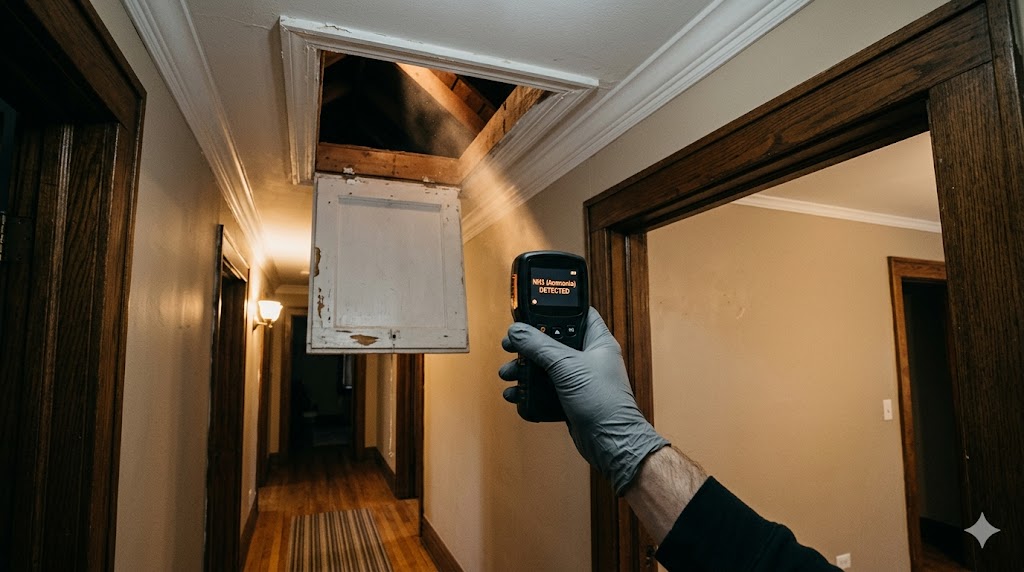
In my experience, most homeowners first notice the smell in a hallway near the attic hatch rather than inside the attic itself. Because hot air in the attic is under pressure, it forces the odor through the gaps in the hatch seal long before you ever decide to climb up there and investigate.
The diagnostic: chemical vs. biological odors
Identifying the source correctly is the difference between a $200 fix and a $4,000 mistake. You have to be a detective before you call a contractor.
The sniff test
Ammonia ($NH_3$) is a sharp, stinging gas. If the smell reminds you of window cleaner, it is typically tied to urea-formaldehyde resins or fresh pest urine.
Biological decay is different. A dead rodent produces a “heavy” or “sickly sweet” scent. Crucially, a dead animal smell is localized. It stays within a small radius. If the smell is uniform across the entire attic, it is almost certainly a material or ventilation issue.
The UV light check
Animal urine contains phosphorus, which glows neon yellow or green under a UV flashlight.
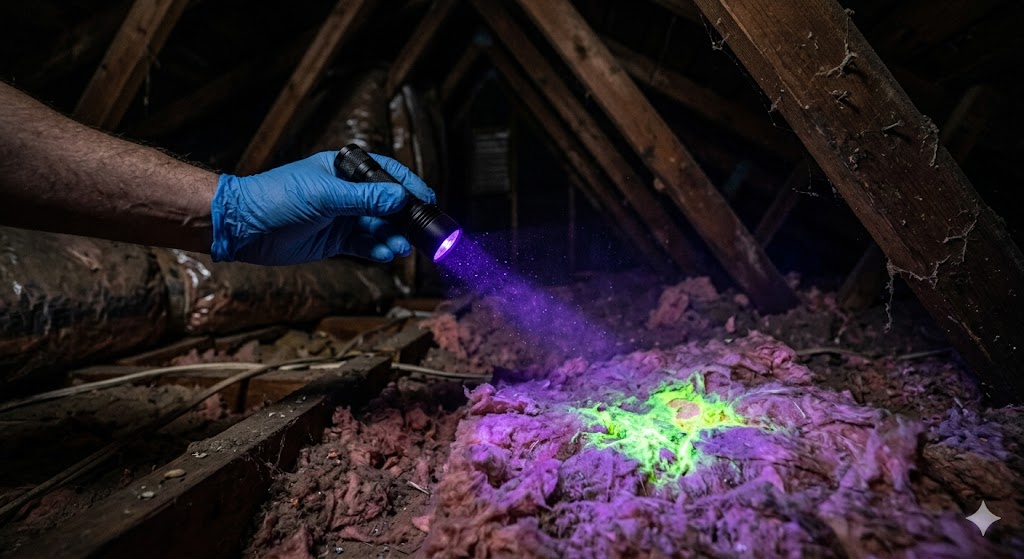
Check the wooden joists for “rub marks”—oily stains left by the fur of raccoons. If the insulation looks clean and shows no reaction to UV light, the material itself is likely off-gassing.
Table 1: The attic odor diagnostic chart
| Scent Profile | Likely Culprit | Key Diagnostic Trigger |
|---|---|---|
| Sharp Ammonia | Pest Urine or UFFI Foam | Spikes during high humidity or heat. |
| Sickly Sweet Rotting | Dead Rodent (Mouse/Rat) | Localized; stays consistent in any weather. |
| Sour, Vinegar-like | Damp Cellulose | Occurs after roof leaks or poor venting. |
| Dusty or Musty | Mold or Mildew | Common with blocked soffit vents. |
| Acrid or Plastic | Electrical Overheating | Strongest when the HVAC system runs. |
Why old insulation releases ammonia gas
The problem usually lies in the industrial binders used in insulation manufactured between 1970 and 1995.
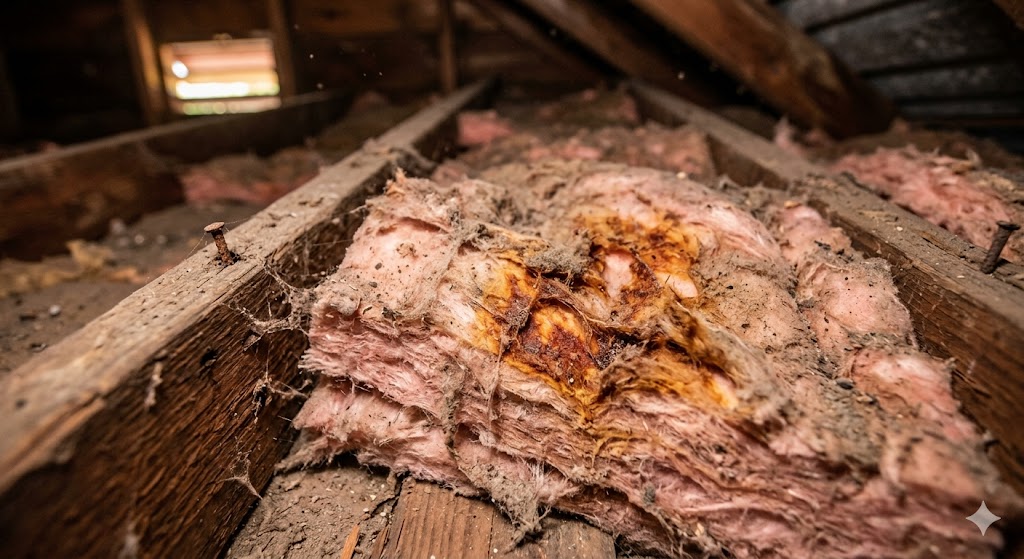
Urea-Formaldehyde Foam (UFFI)
UFFI was a common retrofit foam. Over time, this foam undergoes hydrolysis. When exposed to humidity, the resins break down and release ammonia. The Environmental Protection Agency (EPA) notes that formaldehyde is a respiratory irritant. If you have yellow, crumbly foam in your attic that stinks, the material has likely reached its shelf life.
Phenol-Formaldehyde binders in fiberglass
Older fiberglass batts used phenol-formaldehyde binders. These binders are stable at room temperature but fail in extreme heat.
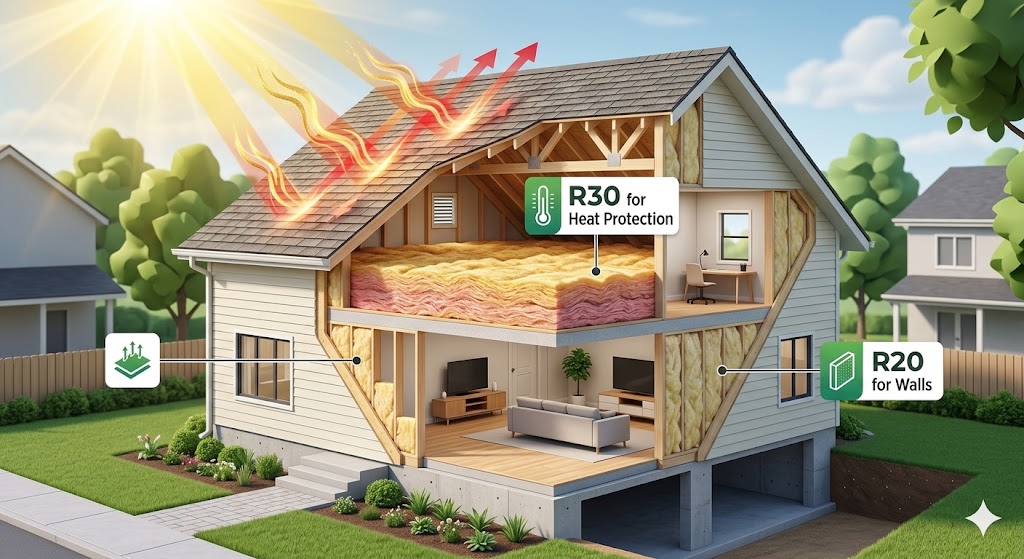
In one attic inspection in Arizona, the cat urine smell only appeared after noon because temperatures crossed 135°F near the roof decking. This extreme heat caused the fiberglass binders to “cook” and release ammonia gas, which then drifted down into the living spaces.
Cellulose and moisture management
Many homeowners ask, “should i let people insulate my attic with cellulose?“
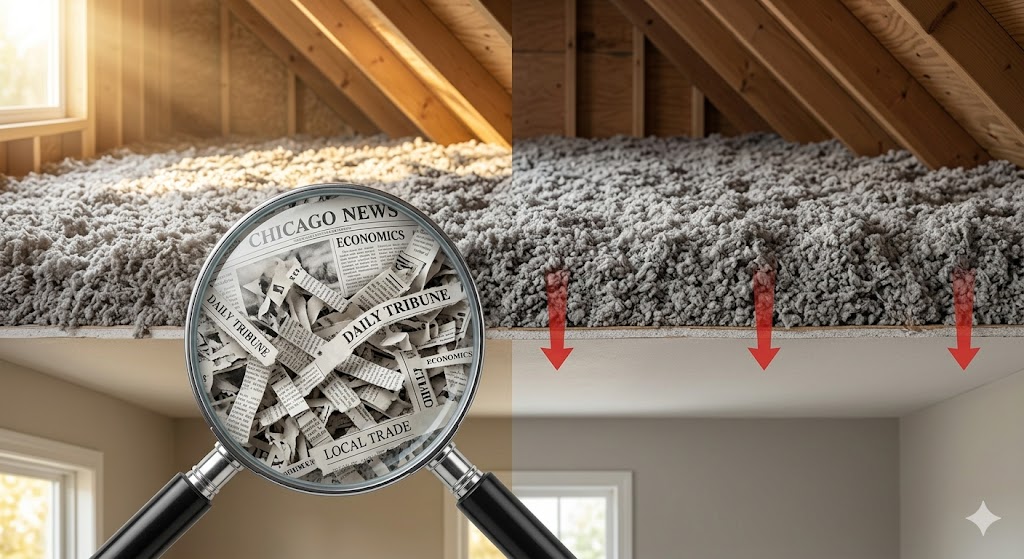
Cellulose is an excellent recycled paper product for 2026 energy standards. However, it is treated with ammonium sulfate for fire retardation. If the cellulose gets wet from a roof leak, the sulfate reacts with moisture to produce ammonia gas. According to CIMA (Cellulose Insulation Manufacturers Association), cellulose shouldn’t produce an odor if kept below 15% moisture.
Table 2: Material chemistry and odor triggers
| Insulation Material | Reactive Component | Primary Odor Trigger |
|---|---|---|
| Old Fiberglass Batts | Phenol-Formaldehyde | High heat (130°F+) and poor airflow. |
| UFFI Foam (Legacy) | Urea-Formaldehyde | Humidity or direct moisture contact. |
| Modern Cellulose | Ammonium Sulfate | Roof leaks or improper bathroom venting. |
| Spray Foam (SPF) | Isocyanates | Improper mix ratio during installation. |
Biological sources: raccoon latrines
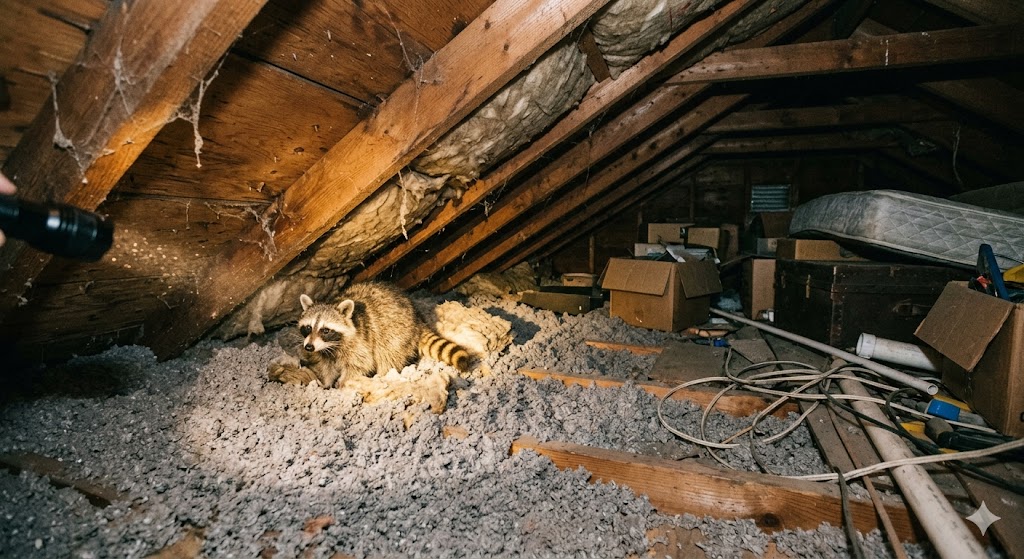
If your UV tests point to a biological source, the odor is likely from an accumulation of nitrogenous waste. Raccoons are communal in their bathroom habits and often use a specific corner of the attic as a “latrine.” Their urine is high in nitrogen, which breaks down into ammonia. Because raccoons are large, the waste can saturate the insulation and the drywall ceiling below. This creates a scent reservoir that remains even after the animals are removed.
Thermal dynamics and the “2 PM spike”
Solar radiation peaks in the mid-afternoon. This heats the attic air, causing it to expand. This pressurized air looks for an exit and pushes through recessed lights, attic hatches, or wall cavities. This explains why a house can smell fine at 8 AM but smell like a litter box by dinner time.
The HVAC connection
If your return air ducts are in the attic and have leaks, they will suck in attic air and distribute it through your vents. Closing bedroom doors can also create negative pressure in the hallway, pulling attic air down through the hatch to balance the room’s pressure.
Resale value and home inspections
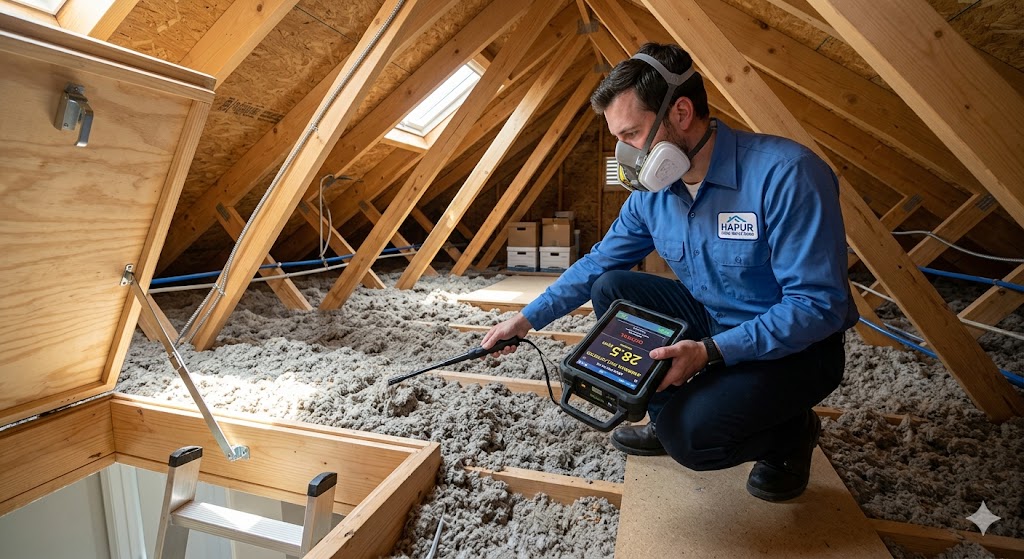
In the 2026 market, buyers often use portable air quality sensors during tours. An experienced inspector will identify a cat urine odor as a high-priority defect. It is usually listed as either a “Biological Hazard” or “Material Failure.” Fixing the odor before listing is a practical strategy. It prevents buyers from assuming the house has structural rot or severe infestations.
Solutions: removal vs. remediation
Remediation depends on whether the source is material failure or a pest.
Spot cleaning for pests
If you find a localized raccoon latrine, you can avoid a full replacement:
- Seal entry points to prevent re-entry.
- Vacuum out the contaminated insulation in a 10-foot radius.
- Use an enzymatic cleaner to break down the uric acid crystals in the wood.
- Replace with new insulation.
Full removal for off-gassing
If the material is off-gassing, there is no spray to fix it. You must remove the source. When replacing, contractors often compare r20 vs r30 insulation thickness. The Department of Energy (DOE) now suggests at least R-49 to R-60 for most USA climates. R-20 is often insufficient for modern energy codes in colder or hotter regions.
Table 3: Estimated remediation costs (2026 USA Market)
| Problem Type | Action Required | Estimated Cost |
|---|---|---|
| Dead Rodent | Localization, removal, and sanitizing. | $300 – $600 |
| Active Raccoons | Trapping, exclusion, and latrine cleanup. | $1,200 – $2,500 |
| Chemical Failure | Full removal and new insulation. | $3,500 – $7,000 |
| Poor Ventilation | Installing new ridge or soffit vents. | $800 – $1,800 |
Homeowner diagnostic checklist
- Track the timing: Does it peak at 2 PM? (Chemical/Ventilation). Is it constant? (Pest/Dead animal).
- Check the humidity: If attic humidity is over 60%, chemical breakdown is more likely.
- The UV Sweep: Use a UV light at night to look for glowing trails.
- Inspect the HVAC: Turn the AC off for 4 hours. Does the smell in the hallway go away? If yes, check for duct leaks.
Avoid Ozone generators
Ozone is a powerful oxidizer. In an attic, it can degrade the rubber insulation on electrical wiring, creating a fire hazard. It can also react with existing attic chemicals to create new pollutants. Ozone only masks the symptom; it never removes the source.
Is that “cat urine” smell actually dangerous to breathe?
Will the smell eventually just go away on its own?
Can I get my home insurance to pay for this?
Why not just run an Ozone machine or use heavy-duty air fresheners?
How can I be 100% sure it’s the insulation and not a dead rat?
Final verdict
An attic that smells like cat urine is a warning sign that your attic environment is out of balance. Start with a UV light and a humidity check. If the attic is clean but the air is sharp, it is likely time for a material upgrade. Addressing the source protects both your respiratory health and your home’s equity.