


Full attic restoration after a raccoon infestation typically runs $3,500–$8,500 for an average 1,500 sq ft Chicago-area home. That figure covers three things: trapping and exclusion, biohazard decontamination, and new code-compliant insulation. Here’s exactly where that money goes, and how to tell if you’re being overcharged — or underquoted.
Chicago’s labor rates and contaminated-waste disposal requirements make this market more expensive than the national average. If you’re in Naperville, Aurora, Elgin, or other outer suburbs, expect similar rates — the cost driver here is the work involved, not the zip code.
Why Raccoon Cleanup Costs What It Costs
A raccoon infestation is a biohazard event, not just a pest problem. Raccoons are creatures of habit — they return to the same corner of an attic to relieve themselves daily, creating a “latrine” that saturates the insulation beneath it and can eventually soak through to the drywall ceiling. Left unaddressed, that moisture and waste contributes to structural rot over time.
Here’s the itemized breakdown:
| Step | What It Involves | Typical Cost |
|---|---|---|
| Trapping & exclusion | Removing the animals; sealing entry points in the roof, soffits, or vents with steel mesh | $350 – $700 |
| Biohazard decontamination | HEPA-filtered vacuum removal of contaminated insulation, plus antimicrobial fogging to neutralize waste and the scent markers that attract other raccoons | $1,200 – $3,000 |
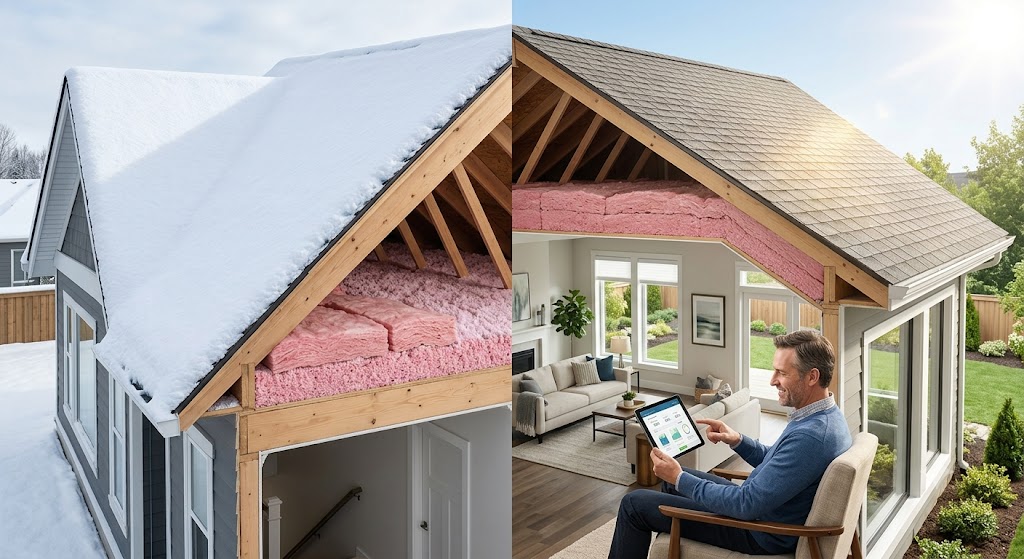
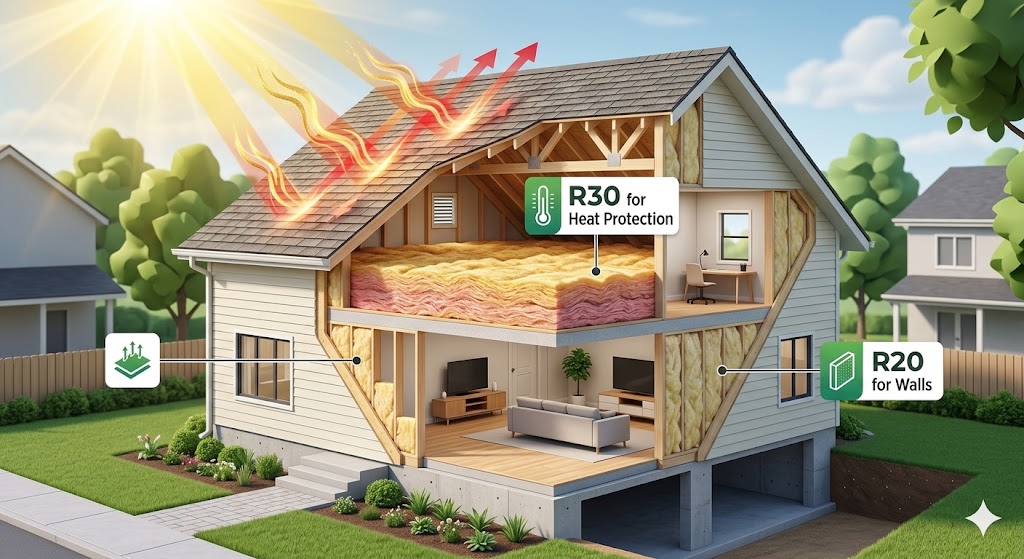
| New insulation | Chicago is Climate Zone 5; current code generally calls for R-49 to R-60 | $2,000 – $4,800 |
Cleanup only (no new insulation): $1,550 – $3,700 Full restoration (cleanup + insulation): $3,500 – $8,500
For current per-square-foot pricing on the insulation portion specifically, see our insulation cost guide.
Does Your Suburb Affect the Price?
Generally, the work matters more than the zip code, but housing age plays a role. Many homes in older Chicago neighborhoods and inner suburbs have lath-and-plaster ceilings, which require slower, more careful insulation removal since aggressive vacuuming can crack the plaster “keys” that hold the ceiling to the framing. Larger attics in newer outer-suburb construction (parts of Naperville, Aurora, Joliet) tend to push material costs up simply due to square footage. See which crews we have local to your area on our service areas page.
Is Raccoon Waste Actually a Biohazard?
Yes — specifically because of raccoon roundworm (Baylisascaris procyonis). The eggs are microscopic, environmentally hardy, and can stay viable in contaminated insulation for a long time. This is the main reason spot-cleaning alone is risky: disturbing the insulation can make the eggs airborne, and a standard dust mask won’t stop them. Professional crews use full-face respirators and protective suits specifically for this reason.
Why New Raccoons Keep Coming Back
This part gets skipped in most cleanup guides. Raccoons leave scent markers on attic joists that signal “safe den” to other raccoons in the area — so even after you seal the entry point one animal used, a new raccoon can pick up the scent and tear through a different spot (a soffit, fresh shingles) to get back in. Proper cleanup includes enzyme-based fogging specifically to break down those scent compounds, not just mask odor — skip that step and you’re effectively leaving a “vacancy” sign up for the next animal.
Your Attic Isn’t a Sealed Box — the HVAC Connection
If your return air ducts run through the attic (common in Chicago homes) and have any leaks, negative pressure in the house can pull contaminated attic particulates — including roundworm eggs — into your ductwork and out through your vents. A complete cleanup should include a duct pressure check, and we generally recommend switching to MERV-13 filters for about a month afterward to catch any lingering debris.
Heard Noises But Found No Raccoon?
Sometimes the animal is gone by the time an inspector arrives, but you still want a professional check.
- Inspection fee: $150 – $250 — confirms the attic is clear and identifies entry points before they reopen.
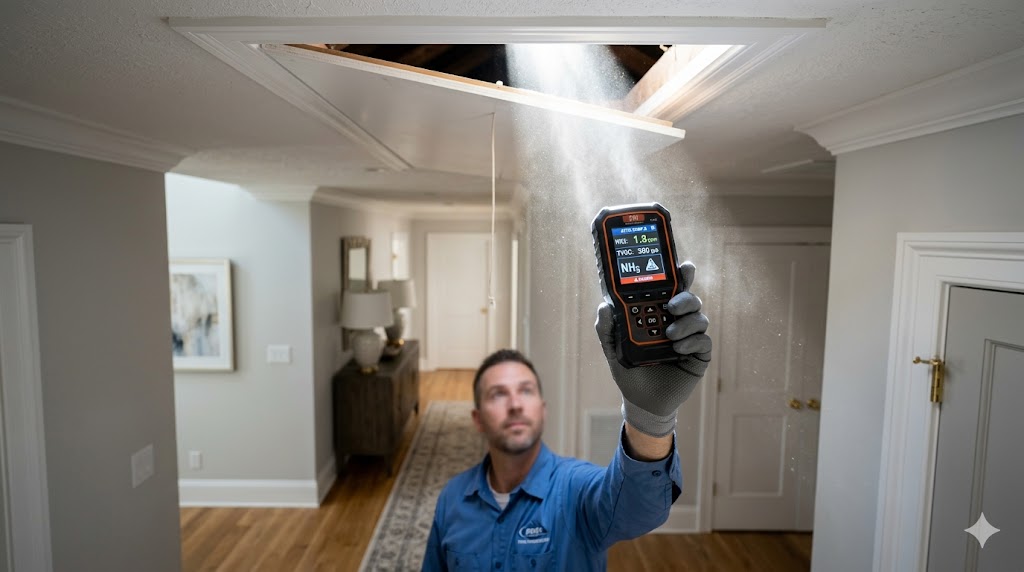
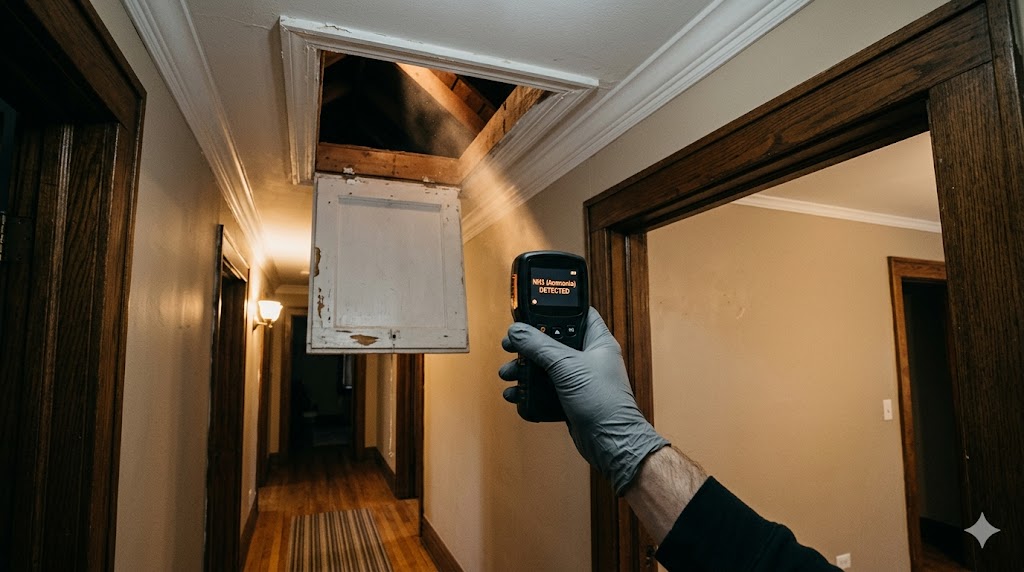
- If the attic is empty but you’re smelling a sharp ammonia odor, it may not be the raccoon at all — old insulation binders breaking down in the heat can produce a near-identical smell. Our attic odor diagnostic guide walks through how to tell the two apart.
Will Insurance Cover Any of This?
This depends on your specific policy, and we’re not insurance agents — so confirm directly with your provider rather than treating this as guaranteed coverage. That said, the general pattern we’ve seen: many Illinois homeowner policies carry a “vermin” exclusion for rats and mice but treat raccoons as “wildlife,” which is sometimes handled differently. Claims tend to go more smoothly when there’s clear evidence of forced entry (a torn shingle, a chewed vent) rather than the animal using a pre-existing gap. If wiring was damaged in the process, mention that specifically — fire-safety-related damage is often viewed differently than general nuisance damage.
Are There Rebates That Offset the Cost?
Often, yes, for the insulation portion specifically. ComEd and Nicor Gas both run energy-efficiency rebate programs that have historically covered upgrades to R-49 or R-60 insulation — but program rules and rebate amounts change periodically, so confirm current figures directly on ComEd’s or Nicor Gas’s rebate pages before counting on a specific number. Many local restoration specialists, ourselves included, also offer a bundled discount when animal removal, cleanup, and insulation replacement are booked as one project rather than three separate jobs.
The Spot-Cleaning Trap
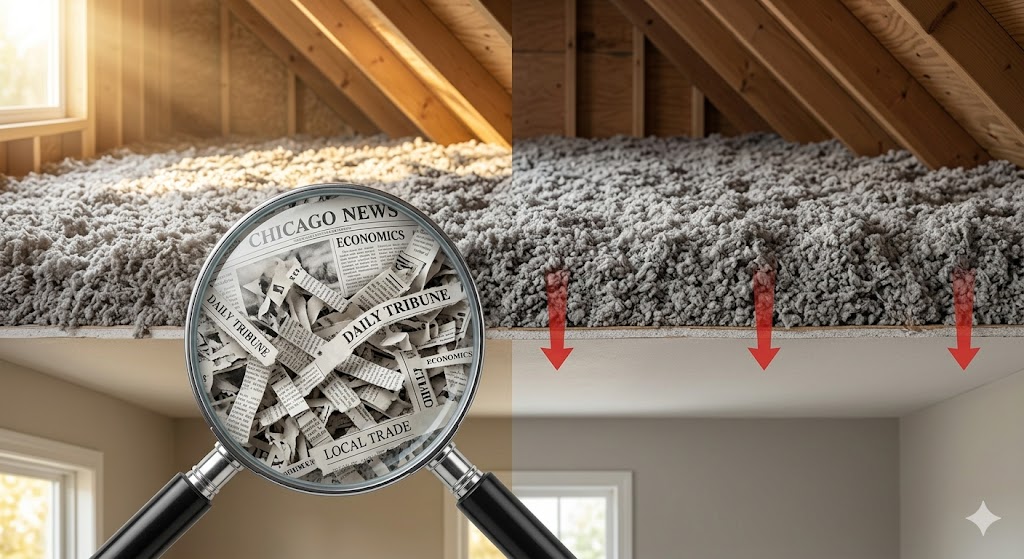
Some contractors offer cheap spot-cleaning to win a low bid. We’d avoid it in most cases: raccoon urine doesn’t stay where it lands — it travels sideways through joists via capillary action and soaks deep into the insulation’s pulp. If you can see one latrine, there’s a good chance a meaningful amount of waste is hiding in the layer below where a UV light can’t reach. Paying for a partial clean now often means paying for a full gut job in a year, once the smell hasn’t actually left.
The Vapor Barrier Problem in Climate Zone 5
In a Chicago winter, warm, moist air from your kitchen and bathrooms rises into the attic. If 20 inches of new insulation goes in without proper air sealing first, that moisture gets trapped between the ceiling and the new material — leading to condensation and, eventually, mold. Make sure whoever you hire is air-sealing light fixtures and the top plate, not just adding insulation on top of the problem. Our spray foam insulation page covers one common way to address this in older homes.
Does This Affect Resale Value?
Raccoon urine can leave permanent yellow staining on ceiling drywall, and inspectors increasingly use moisture meters and thermal cameras during home sales specifically to check for wildlife history. Unaddressed, this kind of damage can come up during negotiations and cost more in a price reduction than the cleanup would have.
Final Cost Checklist
- Animal removal & exclusion: $350 – $700
- Biohazard cleaning: $1,200 – $3,000
- New insulation: $2,000 – $4,800
- Utility rebates (verify current amount): typically a few hundred dollars off the insulation portion
Frequently Asked Questions
Does insurance cover raccoon damage in Chicago? It can, but it’s policy-specific. Many Illinois homeowner policies exclude “vermin” like rats and mice but classify raccoons as “wildlife,” which is sometimes covered differently. Coverage is generally stronger with clear signs of forced entry than with an animal that used an existing gap. Confirm with your carrier directly — we can’t guarantee coverage on your behalf.
How much does it cost to remove raccoon waste from an attic? For trapping, exclusion, and biohazard cleanup alone (not including new insulation), expect roughly $1,550–$3,700 in the Chicago area. With new insulation included, total restoration typically runs $3,500–$8,500.
Is it safe to clean raccoon feces yourself? We don’t recommend it. Raccoon roundworm eggs are microscopic, become airborne when disturbed, and a standard dust mask won’t filter them out. DIY cleanup also risks pulling contaminated dust into your HVAC system, turning a contained attic issue into a whole-house one.
This article was written by Ethan Jones and technically reviewed before publishing.
Ethan co-founded CATUS in 2020 to bring code-compliant, transparently-priced insulation work to homeowners across the Chicago area. Ethan and the CATUS team have completed insulation, air-sealing, and crawl space work in homes throughout Cook, DuPage, and Lake counties, with a particular focus on Climate Zone 5 building science — the specific challenges of insulating Chicago’s bungalows, two-flats, and post-war housing stock against polar vortex winters and humid summers.