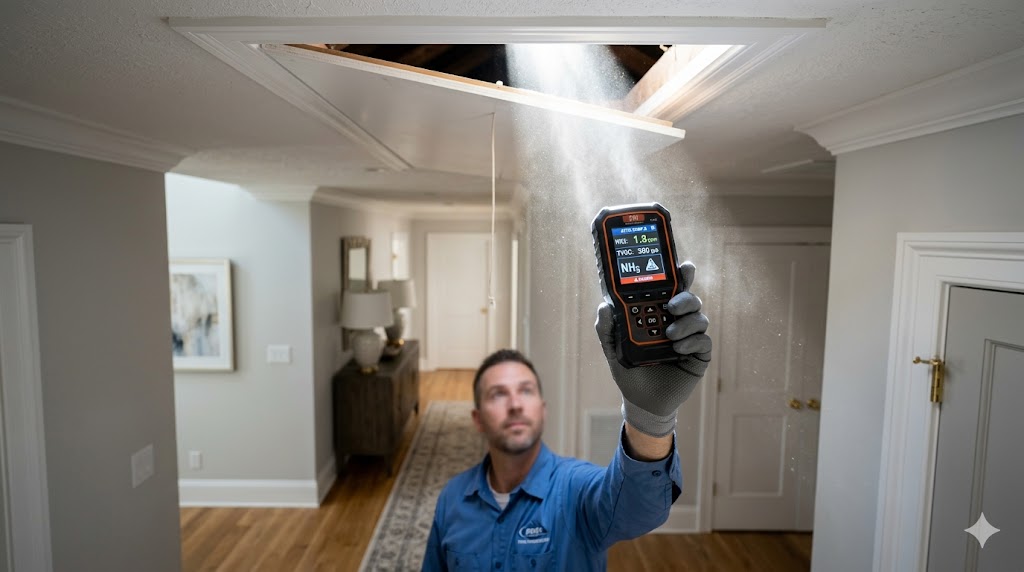


If your home suddenly smells like a dirty litter box and you don’t own a cat, you’re not imagining it — and you’re not alone. We get this call regularly from homeowners across the Chicago area. The short answer: it’s almost always either a chemical reaction happening inside your attic insulation, or a pest that’s been using your attic as a bathroom. Below is how to tell which one you’ve got, and what each actually costs to fix.
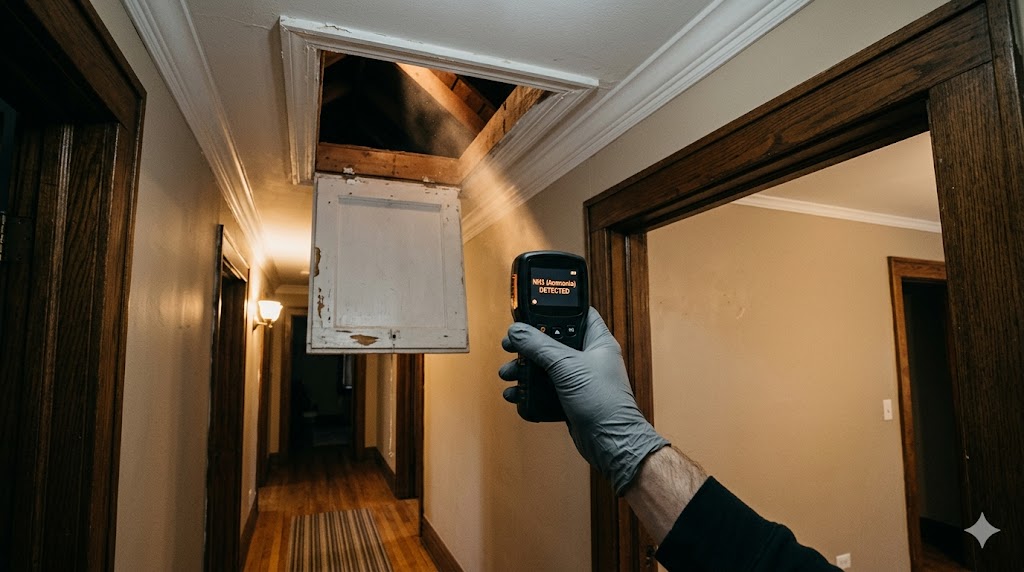
Most homeowners notice the smell first in a hallway near the attic hatch, not inside the attic itself. Hot attic air is under pressure, so it pushes the odor through gaps in the hatch seal long before most people climb up to investigate.
Step 1: Figure Out If It’s Chemical or Biological
Identifying the source correctly is the difference between a $200 fix and a $4,000 mistake. Before calling a contractor, you can narrow it down yourself with two simple checks.
The Sniff Test
Ammonia is a sharp, stinging smell — if it reminds you of window cleaner, you’re likely dealing with old insulation binders breaking down, or fresh pest urine.
A dead rodent smells different: heavier, sweeter, almost sickly. Crucially, that smell stays localized to a small area. If the smell is spread evenly across the whole attic instead of concentrated in one spot, it’s much more likely a material or ventilation issue than an animal.
The UV Light Check
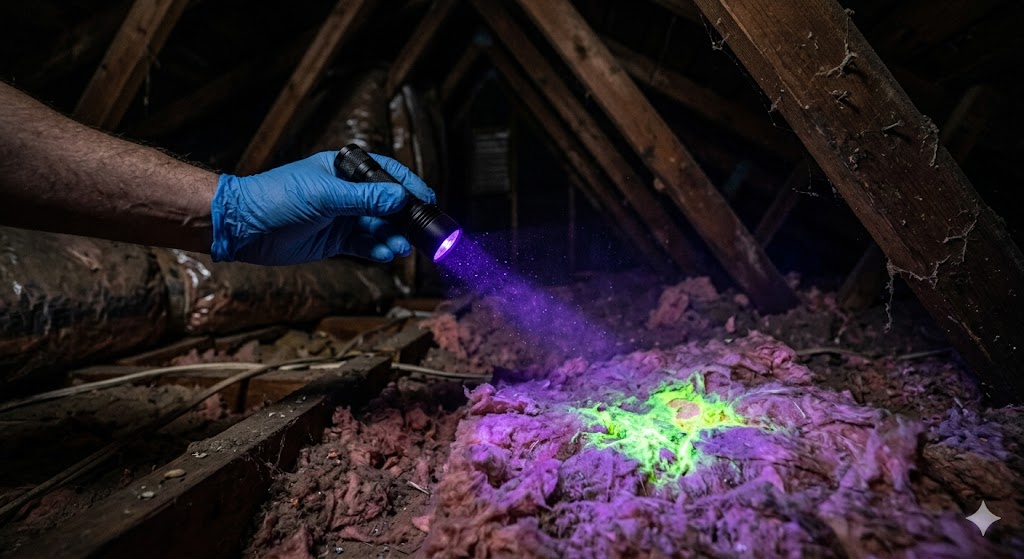
Animal urine contains phosphorus, which glows neon yellow-green under a UV flashlight. Run one across your joists and insulation at night. Oily “rub marks” on wood — stains left by fur — usually point to raccoons rather than smaller rodents. If the UV light shows nothing and the insulation looks clean, the material itself is probably off-gassing.
Quick diagnostic chart:
| Scent Profile | Likely Cause | Key Clue |
|---|---|---|
| Sharp, ammonia-like | Aging insulation binders or pest urine | Gets stronger in heat or humidity |
| Sickly sweet, rotting | Dead rodent | Stays localized; doesn’t change with weather |
| Sour, vinegar-like | Damp cellulose insulation | Follows a roof leak or poor venting |
| Musty or dusty | Mold/mildew | Common with blocked soffit vents |
| Acrid, plastic-like | Electrical overheating | Strongest when HVAC is running |
Why Old Insulation Releases Ammonia on Its Own
This surprises a lot of homeowners: insulation can produce an ammonia smell with no animal involved at all. The usual culprits are materials manufactured roughly between 1970 and 1995.
Urea-formaldehyde foam (UFFI): a retrofit foam common in that era. Over decades, the foam breaks down through hydrolysis — when it absorbs humidity, the resins release ammonia gas. If you find yellow, crumbly foam in your attic with a chemical smell, it’s likely reached the end of its usable life. The EPA notes that formaldehyde exposure is a respiratory irritant, which is part of why this material fell out of use.
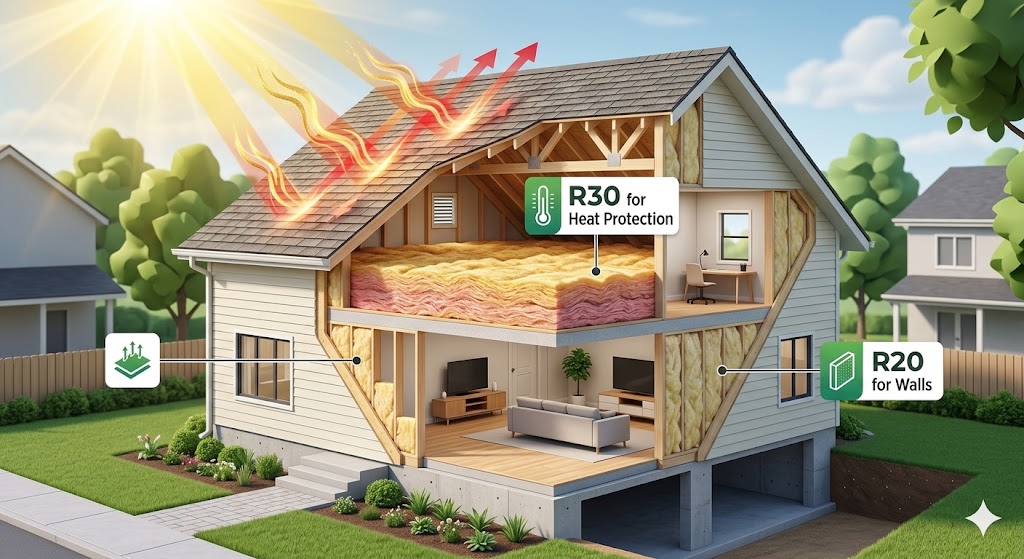
Phenol-formaldehyde binders in older fiberglass: stable at room temperature, but they can break down under sustained heat. Chicago roof decks regularly cross 130–140°F in summer, which is enough to trigger this reaction in older batts.
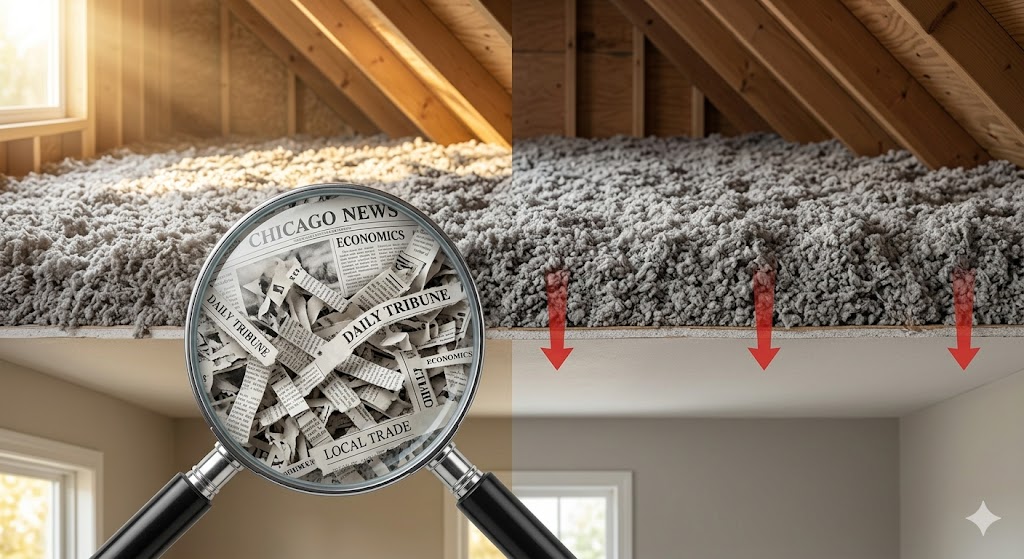
Cellulose and moisture: Cellulose is treated with ammonium sulfate as a fire retardant — that’s normal and safe. But if it gets wet from a roof leak or poor bath-fan venting, the sulfate reacts with the moisture and produces ammonia gas. According to the Cellulose Insulation Manufacturers Association (CIMA), properly installed cellulose shouldn’t smell at all as long as moisture stays under roughly 15%.
| Material | Reactive Component | What Triggers the Smell |
|---|---|---|
| Older fiberglass batts | Phenol-formaldehyde binder | Sustained heat above ~130°F |
| UFFI foam (legacy installs) | Urea-formaldehyde resin | Humidity or direct moisture contact |
| Modern cellulose | Ammonium sulfate | Roof leaks or bathroom vents dumping into the attic |
| Spray foam (SPF) | Isocyanates | Incorrect mix ratio during original installation |
Not sure which type you have? Our insulation types and materials guide breaks down what’s typically installed in Chicago-area homes by decade built.
If It’s Biological: Raccoon Latrines
If your UV check points to an animal rather than a material issue, raccoons are the most common culprit in Chicago attics. They’re surprisingly consistent about using one specific corner as a “latrine,” and because their waste is high in nitrogen, it breaks down into ammonia — which is why a raccoon problem can smell almost identical to a chemical one.
We cover the full cost breakdown, the health risk (raccoon roundworm), and the cleanup process in our raccoon attic infestation cleanup guide — worth reading if your UV test came back positive. Short version: trapping, exclusion, and biohazard cleanup alone typically runs $1,550–$3,700 in the Chicago area; add new insulation and you’re usually looking at $3,500–$8,500 total.
The “2 PM Spike” — Why It’s Worse in the Afternoon
Solar heating peaks mid-afternoon. As attic air heats up, it expands and looks for an exit — through recessed lights, the attic hatch, or wall cavities. That’s why a house can smell fine at 8 AM and noticeably “off” by dinner. If your return air ducts run through the attic and have leaks, they’ll actively pull that air into your HVAC system and distribute it through your vents. Closing bedroom doors can make this worse, since it creates negative pressure that pulls hallway (and attic) air into the room.
What This Means If You’re Selling
Buyers increasingly bring portable air quality sensors to showings. A noticeable attic odor gets flagged by inspectors as either a “biological hazard” or “material failure” — and either label makes buyers nervous about rot or infestation, even when the actual fix is simple. Addressing it before listing is almost always cheaper than the price reduction it can trigger during negotiation.
What It Actually Costs to Fix
| Problem | What’s Involved | Typical Cost (Chicago area) |
|---|---|---|
| Dead rodent | Locating, removing, sanitizing | $300 – $600 |
| Active raccoons | Trapping, exclusion, biohazard latrine cleanup (insulation replacement billed separately — full breakdown here) | $1,550 – $3,700 |
| Off-gassing material | Removing failed insulation, installing new material | $3,200 – $6,000 |
| Poor ventilation | New ridge or soffit vents | $800 – $1,800 |
For current installed pricing by material type, see our insulation cost guide.
Spot-Cleaning vs. Full Removal
If the cause is a pest, spot cleaning a localized latrine can work: seal the entry point, vacuum the contaminated insulation in roughly a 10-foot radius, treat with an enzymatic cleaner, and replace the insulation.
If the cause is off-gassing material, there’s no spray fix — the source has to come out. Current Illinois energy code for our climate zone generally calls for R-49 to R-60 in most attics; R-20 and below is typically under code here.
Don’t Reach for an Ozone Machine
Ozone is a strong oxidizer. In an attic, it can degrade the rubber insulation on electrical wiring — turning an odor problem into a fire-risk problem — and it can react with existing attic chemicals to create new ones. It also only masks the smell temporarily, which makes the real source harder to track down later.
Homeowner Checklist Before You Call Anyone
- Track the timing — does it peak around 2 PM (chemical/heat) or stay constant all day (pest or dead animal)?
- Check attic humidity — above ~60% makes a chemical reaction more likely.
- Run the UV sweep at night, looking for glowing trails or stains.
- Test your HVAC — turn the AC off for a few hours. If the hallway smell fades, suspect duct leaks pulling in attic air.
Frequently Asked Questions
-
Is that “cat urine” smell actually dangerous to breathe?
It depends on the source and concentration. Low-level ammonia from aging insulation is an irritant — it can cause headaches or throat irritation with prolonged exposure — but it isn’t typically an acute emergency at normal attic levels. If it’s strong enough to notice in your living space, not just the attic, that means air is bypassing your insulation and likely your ductwork too, which is worth addressing rather than living with long-term. For more on indoor air quality considerations generally, see our health and safety overview.
-
Will the smell eventually just go away on its own?
Usually not. If it’s a material reaction, the breakdown continues whenever the trigger conditions (heat, humidity) recur, so the smell tends to come back seasonally instead of fading for good. If it was a one-time event like a dead rodent, the smell can clear in a few weeks, but the saturated insulation underneath typically still needs to be removed.
-
Can I get my home insurance to pay for this?
Sometimes, but it depends entirely on your policy and the cause — we’re not insurance agents, so we can’t promise either way. In general, sudden pest entry (forced through a vent or shingle) has a better chance of being covered than gradual material breakdown, which most policies treat as routine maintenance. Call your provider and describe the specific cause before assuming anything.
-
Why not just run an Ozone machine or use heavy-duty air fresheners?
They mask the smell rather than fix it, and ozone specifically can degrade wiring insulation in your attic — a real fire-safety concern. A strong cover-scent also makes the actual source harder to track down later.
-
How can I be sure it’s the insulation and not a dead rat?
Check whether the smell is localized to one small area (more likely an animal) or spread evenly through the attic (more likely material or ventilation), and whether it tracks with heat (chemical) or stays constant regardless of temperature (biological). A UV flashlight will usually show urine staining clearly if pests are involved. If you’re still unsure, a same-day inspection is the only way to know for certain.
The Bottom Line
An attic smelling like cat urine without an actual cat is your house telling you something’s out of balance — either a material that’s reached the end of its life, or an unwelcome tenant. Start with the UV light and the humidity check. If the air is sharp but the insulation looks physically clean, it’s probably time for a material upgrade — see our attic and roof insulation services for what that typically involves in Chicago-area homes.
This article was written by Ethan Jones and technically reviewed before publishing.
Ethan co-founded CATUS in 2020 to bring code-compliant, transparently-priced insulation work to homeowners across the Chicago area. Ethan and the CATUS team have completed insulation, air-sealing, and crawl space work in homes throughout Cook, DuPage, and Lake counties, with a particular focus on Climate Zone 5 building science — the specific challenges of insulating Chicago’s bungalows, two-flats, and post-war housing stock against polar vortex winters and humid summers.