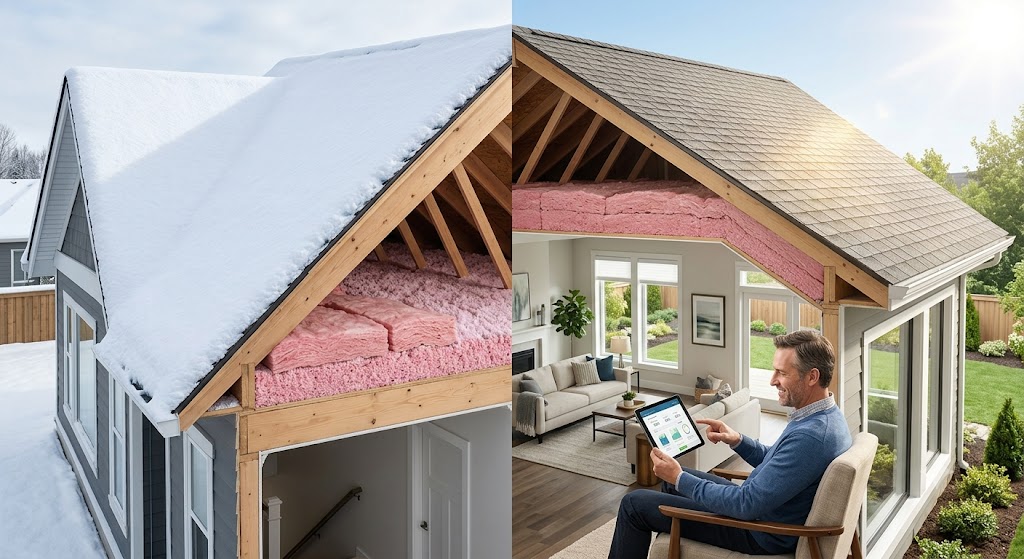
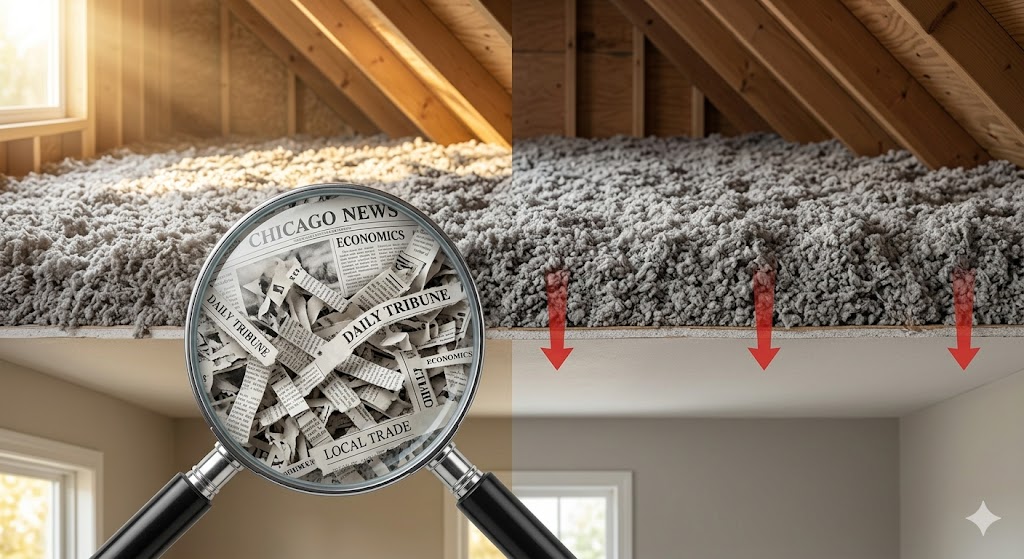



If you are standing in your driveway and a contractor is trying to sell you a “green” attic upgrade, they are probably pitching cellulose. It sounds like a win. You use recycled newsprint to keep your house warm and save the planet.
Most homeowners wonder, “Should I let people insulate my attic with cellulose?” before signing a contract.
It’s a valid concern because most people say yes without asking about the physics of their ceiling. Before you commit, you need to know why that grey fluff is the favorite tool of the modern installer. Whether you are looking for the best insulation for your roof or a quick fix for a drafty house, the choice between materials is permanent.
Why is every contractor pushing cellulose in 2026?
Contractors choose cellulose because the blower machine makes it a 2-hour job. They can pull a truck into your driveway, run a hose into your attic, and fill the space while you are still drinking your morning coffee.
The profit margins on cellulose are often higher for the company. The material is relatively cheap to buy in bulk. Because it flows around pipes and wires easily, the crew spends less time cutting and fitting than they would with fiberglass batts.
Speed equals money in the insulation world. If a crew can finish 3 houses in a day instead of 1, the business grows. This does not mean the material is bad, but you should recognize that the recommendation often comes from a desire for efficiency.
Can a pile of recycled paper actually stop a house fire?
It sounds like a disaster. You are filling your attic with thousands of pounds of shredded paper and expecting it to be safe.
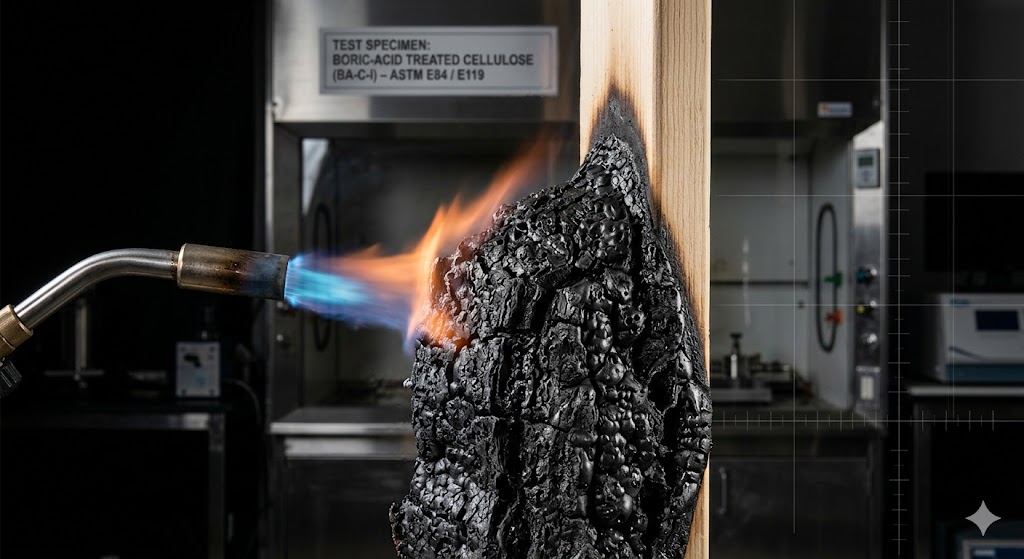
Cellulose uses a charring effect to manage fire. The paper is treated with boric acid or ammonium sulfate. When a flame touches it, the outer layer chars and creates a barrier. This barrier slows the spread of fire by blocking oxygen.
Fiberglass reacts differently. It is made of glass, so it will not catch fire, but it will melt at high temperatures. Once it melts, it can no longer protect the wooden structure of your home. Cellulose often provides a higher fire resistance rating in standard wall and ceiling assemblies because the char layer stays in place longer. Both materials carry a Class A fire rating, but their physical reaction to heat is the deciding factor for safety.
When cellulose is actually better than fiberglass
There are specific situations where cellulose is the superior choice for a Chicago home. If your primary goal is noise reduction, cellulose wins. Its density is nearly 3 times higher than fiberglass batts. It acts as a heavy acoustic blanket that muffles outside traffic and wind.
Cellulose also provides a better air seal in attics with many obstructions. Because it is blown in as small particles, it flows around electrical boxes, irregular joists, and plumbing stacks. Fiberglass batts often leave gaps in these tight spots, which lets heat escape. If you want the air-sealing benefits of foam without the high price tag, cellulose is a middle-ground solution that performs well.
Is your attic ceiling strong enough for the weight of cellulose?
Weight is the most overlooked detail in home improvement. Cellulose is significantly heavier than fiberglass.
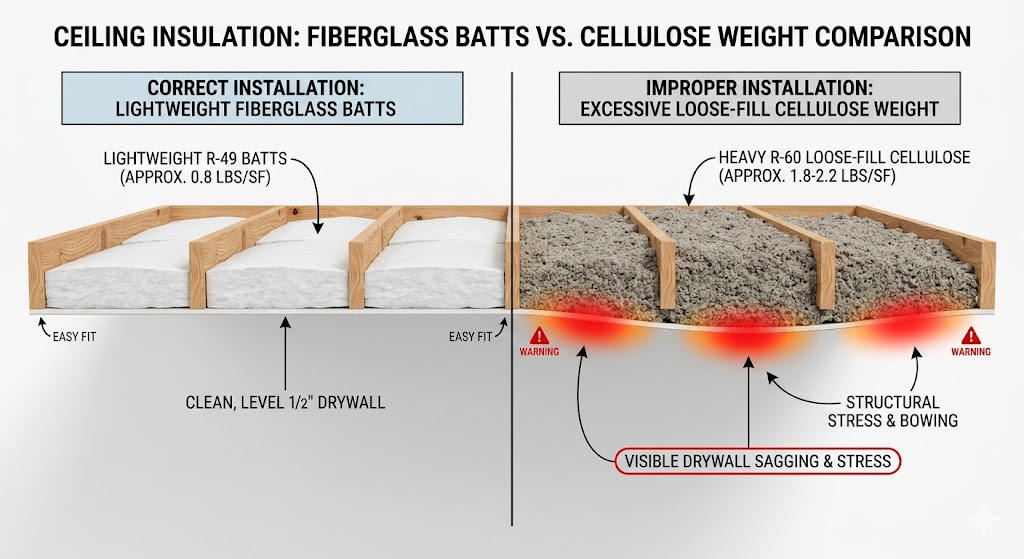
To reach an R-value of R-30, cellulose requires about 1.5 pounds of material per square foot. Fiberglass only needs about 0.5 to 0.7 pounds for that same R-value.
Homeowners with older homes built before 1990 should be careful. Many of these houses use 1/2 inch or even 3/8 inch drywall on 24-inch centers. Over-insulating with heavy cellulose can cause the drywall to sag or pull away from the joists. If your ceiling shows existing cracks or nail pops, adding 1,500 pounds of cellulose might be the breaking point.
Does cellulose turn your attic into a dust bowl?
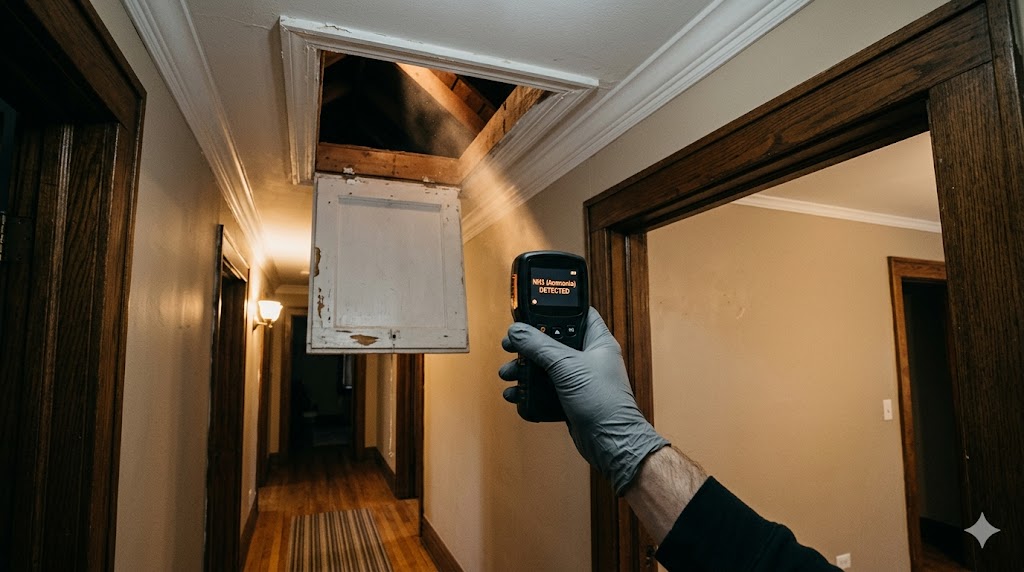
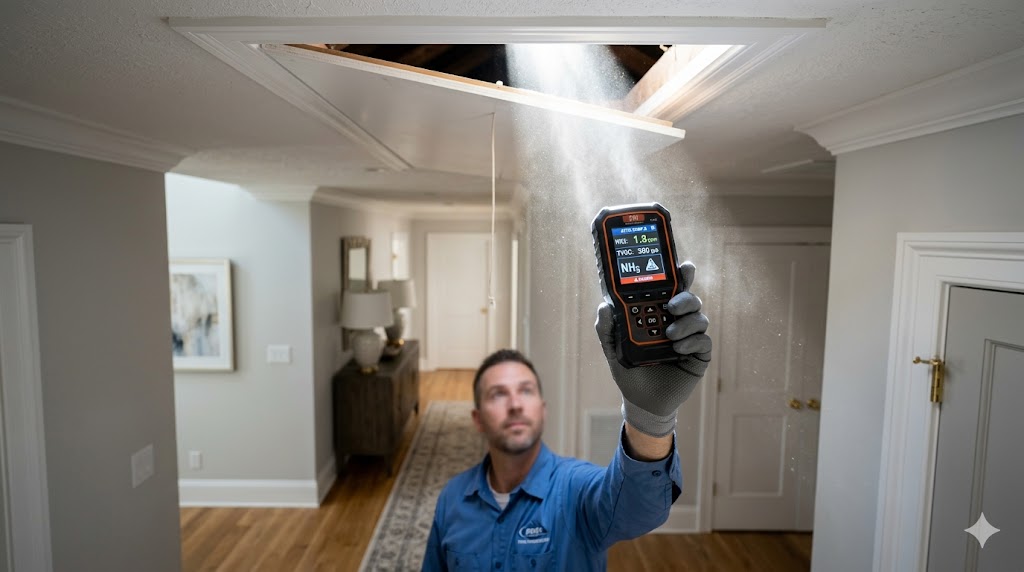
Cellulose is dusty. There is no way to avoid this. The installation process releases a cloud of fine paper fibers and chemicals into the air.
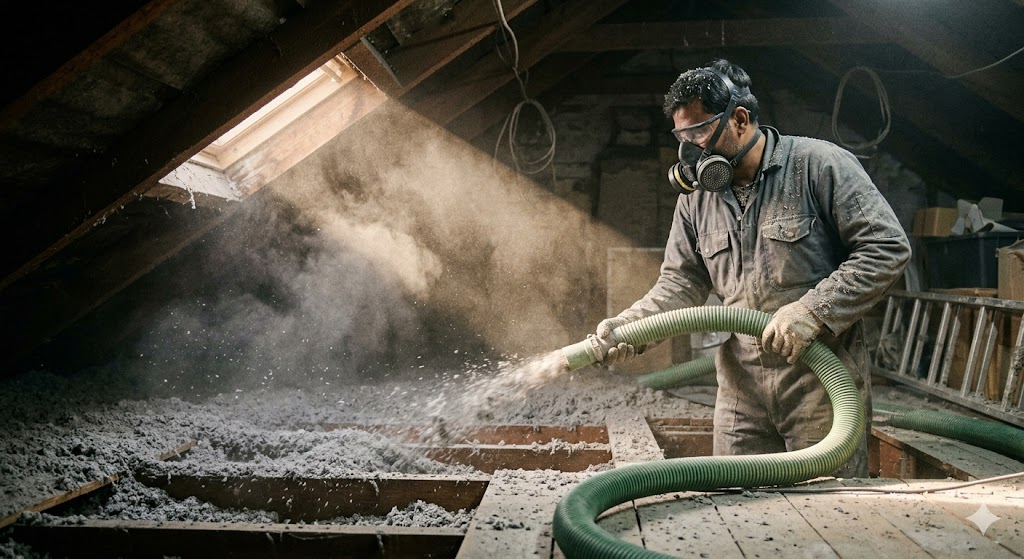
Will the dust seep through your light fixtures?
If your home has recessed “can” lights that are not airtight, the dust will find its way down. These fibers are small enough to pass through tiny gaps in your ceiling fixtures. Once the dust enters your living space, it settles on furniture and inside your HVAC ducts.
Is “low-dust” cellulose a real thing?
Manufacturers often label bags as “low-dust” or “dust-free.” This is a marketing term. While some brands add a small amount of oil to keep the fibers from flying, the material remains a shredded paper product. It creates a mess during the blow-in process and every time a technician crawls through your attic in the future.
Cellulose vs. Fiberglass vs. Spray Foam
| Feature Matrix | Cellulose (Loose) | Fiberglass (Batts) | Spray Foam (Closed) |
|---|---|---|---|
| R-Value per Inch | 3.2 – 3.8 | 2.2 – 2.9 | 6.0 – 7.0 |
| Air Sealing | Good (Dense) | Poor (Porous) | Excellent (Airtight) |
| Fire Resistance | Class A (Treated) | Non-combustible | Varies (Chemical) |
| Moisture Risk | High (Absorbent) | Medium (Traps) | Low (Waterproof) |
| Pest Resistance | High (Boric Acid) | Low (Nesting) | High (Inedible) |
| Average Cost | Mid-range | Lowest | Highest |
Why does cellulose lose 20% of its power over time?
The settling trap is a physical property of loose-fill materials. When the contractor finishes the job, the insulation looks thick and fluffy. Gravity takes over immediately.
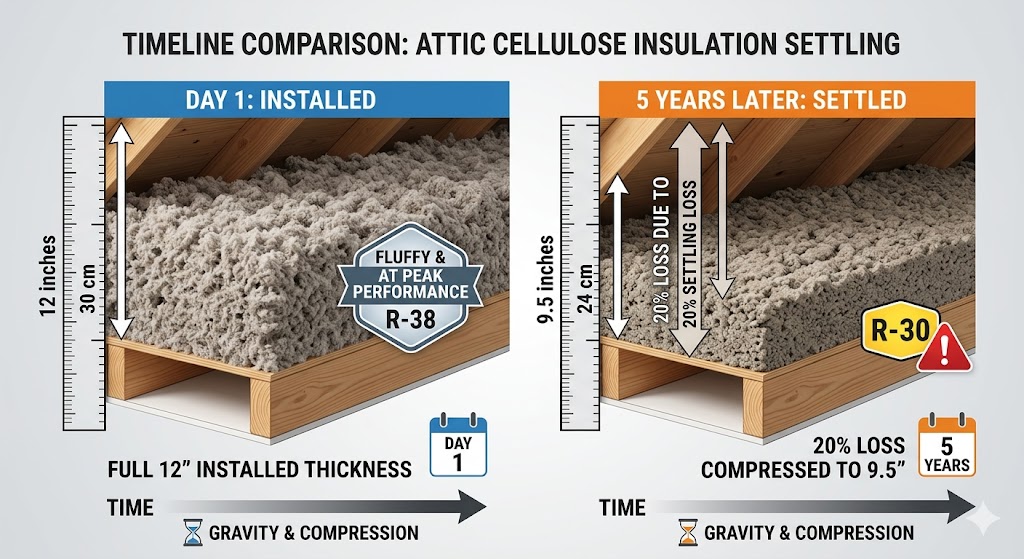
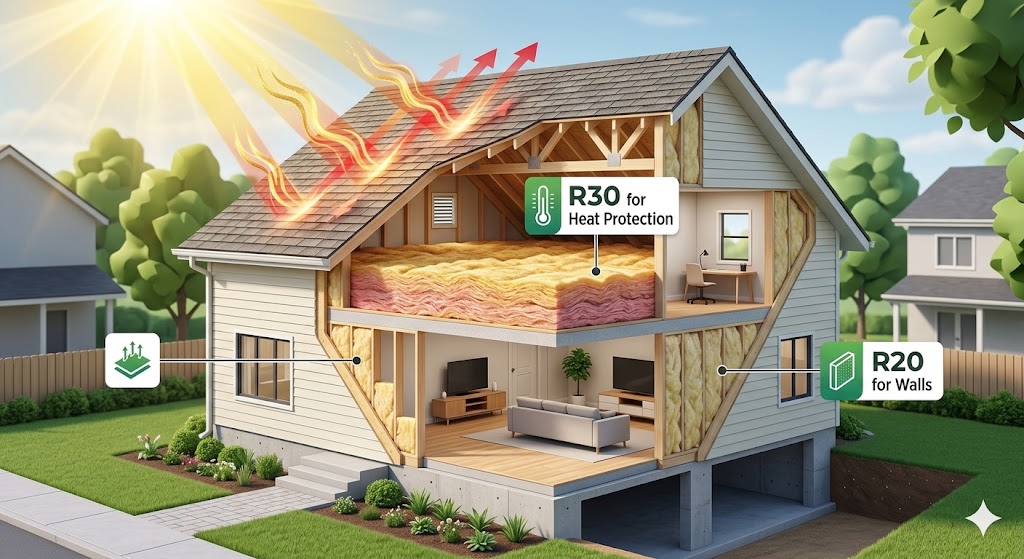
According to the Cellulose Insulation Manufacturers Association (CIMA), loose-fill cellulose is expected to settle between 15% and 20% over its lifetime. This is a certainty due to gravity and atmospheric moisture. This loss of depth is why many people find themselves debating R20 vs R30 insulation after a few winters. They realize their setup settled into something less effective.
The International Residential Code requires contractors to install “initial thickness” to account for this. If you want R-30, the installer must blow in enough material to reach a settled depth of R-30. If they only blow in the exact amount for today, you will have R-24 in 5 years.
The active shield: Is the boric acid in cellulose safe?
Most cellulose uses a boric acid treatment. This chemical prevents fire and repels pests.
Boric acid is less toxic than table salt to humans and pets in small quantities. It is a stable mineral that does not off-gas harmful vapors. However, it is deadly for ants, termites, and cockroaches.
This makes cellulose a functional shield. It creates a biologically hostile environment for bugs. Unlike fiberglass, which can act as a cozy nesting site for mice, the boric acid in cellulose irritates the skin and respiratory systems of small pests.
The verdict: When should you say no to cellulose?
Cellulose is a high-performance material, but it is not a universal solution. Reject cellulose in specific scenarios to protect your home.
1. High moisture areas
Do not use cellulose in a damp crawl space or a leaky attic. Because it is paper, it acts like a sponge. Once cellulose gets wet, it loses its R-value and becomes a breeding ground for mold. If you are dealing with a damp area under your house, look for the best insulation for crawl spaces instead.
2. Weak or aged ceilings
If you own a historic home with plaster ceilings or thin drywall, choose fiberglass. The weight of R-49 or R-60 cellulose is too much for older fasteners to hold over a 20-year period.
3. Severe dust allergies
If members of your household suffer from chronic asthma or severe dust allergies, avoid cellulose. Even with air sealing, the fine particulates from the paper fibers can migrate into the air you breathe.
❓ Frequently Asked Questions
Can you layer R20 and R30 insulation together?
Yes. This is called stacking. If your attic has R20 and you want more power, adding R30 is a smart move. Install the new layer perpendicular (at a 90-degree angle) to the existing one. Never place “faced” insulation with a paper backing on top of another layer as it traps moisture.
Does higher R-value mean better mold protection?
How long will fiberglass insulation actually last?
Sources:
- International Residential Code (IRC) 2024 Energy Efficiency Standards.
- Cellulose Insulation Manufacturers Association (CIMA) Settling Data.
- Department of Energy (DOE) Insulation Fact Sheets.
- ASHRAE Handbook of Fundamentals.